Many Demos, Low Adoption
Use cases showcase technology without fitting into role-specific tasks and decision points.
Financial AI Enterprise Implementation Solutions
The FDE team works alongside your business, using Finloop AI infrastructure to connect models, enterprise knowledge, data, Agents and existing systems, from high-value use cases and prototypes to integration and ongoing operations in production.
Align use cases, knowledge, models, systems and governance around business outcomes.
Use cases showcase technology without fitting into role-specific tasks and decision points.
Knowledge, permissions, tools and processes are disconnected.
APIs, costs, accounts, data and risks lack centralized governance.
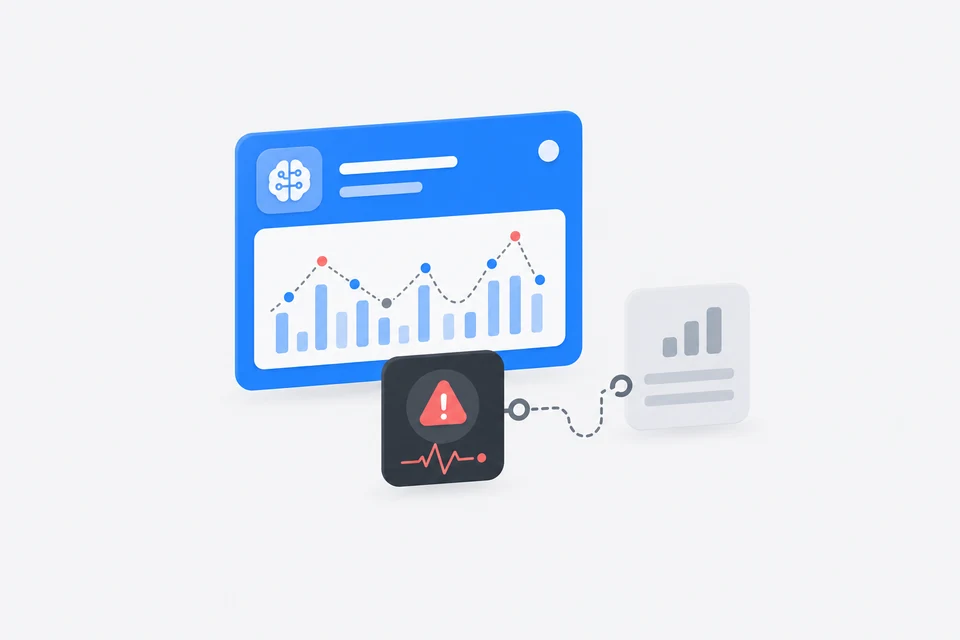
No established evaluation, monitoring, feedback or ongoing operations.
Prioritize cases in KYP reports, GAP analysis, risk alerts or enterprise knowledge and task collaboration.
Roles, original processes, connected systems, human–AI responsibilities, usage frequency and business results require client authorization.
FDE-AI is an implementation method and service model for jointly delivering business outcomes, rather than generic software. High-risk actions and financial judgments retain human review.
Build practical enterprise AI capabilities, from model governance and enterprise data to Agents, workflows and ongoing operations.
Centralized model access, intelligent routing, costs, quotas, keys, permissions and request logs.
Start with use case assessment, then build initial scenarios and progress to enterprise platform operations.
For enterprises still choosing priorities or facing many scattered requirements.
For teams with clear use cases that need validation and integration into real systems.
For scaled AI adoption and governance across teams.
Learn More →FDE is an engineering delivery approach embedded in client businesses, designing technology around business objectives rather than adding another software layer.
Work with business teams to identify frequent tasks, implicit rules, decision points and processes worth changing.
Connect investment management, ERP, OA, knowledge bases, databases and permissions to give AI the context and tools for real tasks.
Turn models, Skills and Agents into controlled business actions through prototypes, integration, governed launch and ongoing operations.
Progress from business use case assessment through design, development, deployment and ongoing operations.
Interview business roles to identify frequent, costly, risky or decision-critical work.
Choose use cases based on business value, data readiness, process complexity, risk and cost.
Define responsibilities across people, Agents, systems and approval steps.
Connect models, knowledge, data, APIs / MCP and business systems.
Configure permissions, evaluation, security, logs, audits, phased releases and training.
Monitor usage, costs, quality and business outcomes, and iterate continuously.
Only confirmed information is shown. Client names, project results and partnership details require authorization before publication.
Prioritize cases in KYP reports, GAP analysis, risk alerts or enterprise knowledge and task collaboration.
Product information extraction, KYP, comparisons, research and allocation support.
Risk information identification, exception alerts, rule checks and audit support.
Knowledge retrieval, proposal preparation, client enquiries and meeting-related tasks.
Assessment depends on the enterprise's technology stack, data readiness, permission boundaries, deployment requirements and priority use cases.
Assessment depends on the enterprise's technology stack, data readiness, permission boundaries, deployment requirements and priority use cases.
Assessment depends on the enterprise's technology stack, data readiness, permission boundaries, deployment requirements and priority use cases.
Assessment depends on the enterprise's technology stack, data readiness, permission boundaries, deployment requirements and priority use cases.
Assessment depends on the enterprise's technology stack, data readiness, permission boundaries, deployment requirements and priority use cases.
Assessment depends on the enterprise's technology stack, data readiness, permission boundaries, deployment requirements and priority use cases.
Plan the first practical AI use case around real business needs, high-value tasks and existing systems.